Ham Hocks with Mustard and Marmalade
by NigellaIntroduction
 “Eternity”, lamented Dorothy Parker, “is a ham and two people.” Now, for me the Christmas Ham is all-important, and the leftovers from it essential; I couldn’t tire of them no matter how many days on the trot I ceremonially unwrap the ever more crinkled foil parcel to cut another slice for a sandwich or shred the salty pink meat to drop into soup or a salad. But a proper joint of gammon does call, at least on its first magisterial outing, for a tableful of people, and I can see that those celebrating a smaller Christmas might find themselves subscribing to Parker’s acerbic view. Abundance is a wonderful thing, but wastefulness is most certainly not. And this, my friends, is where the ham hock comes in. If you’re having a very small Christmas, a fat and stubby ham hock will provide a modest feast for two, but that’s living a bit too dangerously for me, as you run the risk of not having the wherewithal for festive sandwiches on the days ahead. But a hock is such an economical cut, that I feel I can I advise a pair of them even if there are only two of you, and you’ll still have a reassuringly festive supply of ham should there be four of you round the table.
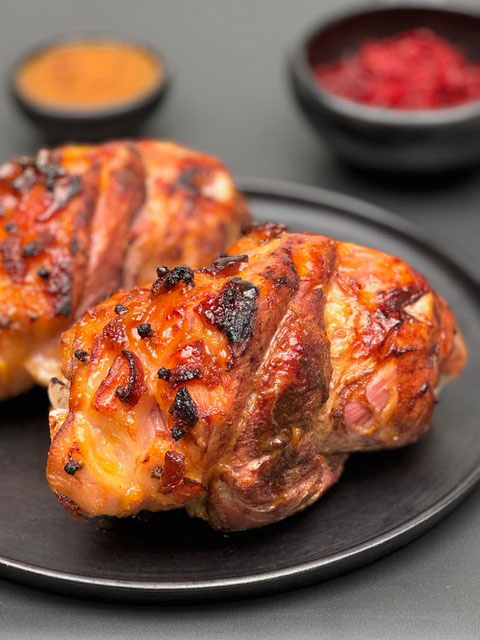
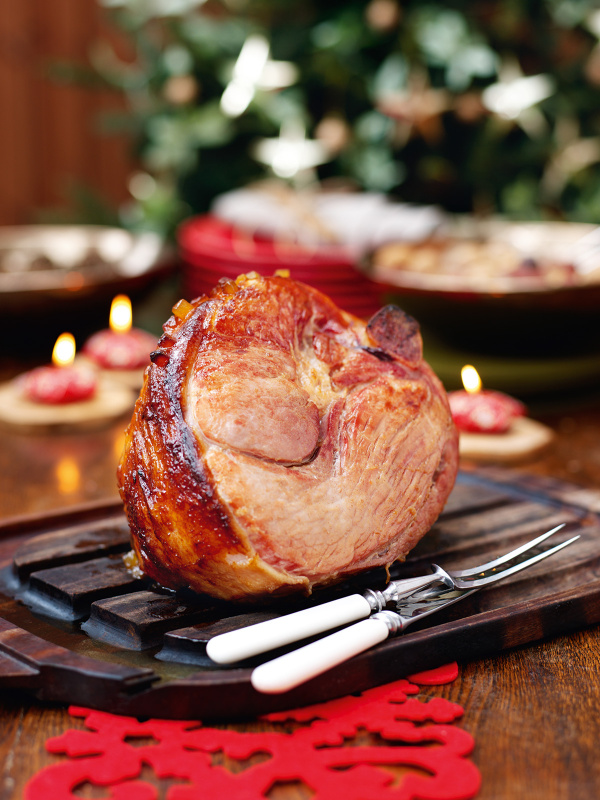
And while we’re on the subject of festive reassurance, these hocks could hardly be simpler to cook. I don’t boil them first then roast them afterwards, as I fear the nuggets of intensely flavoured meat will start unfurling and then fall apart in the bubbling liquid which, on some occasions, hardly matters, but won’t do at all if you want to glaze and burnish them, so that they can stand resplendent on board or platter, a proper Christmassy offering. I cook them in the oven throughout, initially over low-ish heat with water, before brushing them with an easy glaze and studding them with cloves with the oven turned way up high. Now, you’ll never get elegantly thin, pink slices out of a hock, but the meat is fabulously intense and juicy, and you can carve it in parts, then cut the rest from the bone in fat chunks that just burst with supercharged savouriness.
What’s more, the collagen-rich meat makes for a rich, jellied stock which, should you soak the hocks as stipulated, should not be too salty to turn into a cosy pea and ham soup afterwards. Soak 500g / 1 lb green split peas, then add enough water to the scant, strong stock to take it up to 2 litres / 1 ¾ quarts of liquid. Pour into a large pot along with the drained, soaked split peas, add the ham bones and cook until the split peas are very soft and rather less green, adding some little pieces or shreds of leftover ham to the pot to heat through before serving.
A note on a few specifics: while you could use smoked ham hocks, I feel green (or unsmoked) is very much better for this recipe; the meat is more tender, and the stock it makes less overwhelming. I haven’t given a weight for the hocks, as they just come as they come, though they tend to have an average weight of 1.5 kilos / 3 ½ lbs each. I have specified bitter orange marmalade below, as although sweetness pairs so well with the saltiness of the meat, we don’t want all out jamminess; for the record, I use Tiptree Tawny Orange Marmalade. As for the other element in the glaze, I feel the heat of proper strong English mustard is called for here, as well as in the easy stir-together sauce that I serve with it. As for other accompaniments, I go for peas and potatoes – baked if I’m eating this on Boxing Day, or just plain steamed (or boiled) smaller spuds if it’s Christmas Eve – and I strongly recommend some crunchy pickled red cabbage on the table, too.
Finally, I must tell you that these hocks are not just for those celebrating small-scale this year: should you be spending your Christmas away from home, you can also roast a hock or two like this when you get back so that you’re not left in the awful position of having no Christmas ham in the fridge for the remainder of the season.
For those in the US, you may struggle to find cured but unsmoked ham hocks. I wouldn’t recommend using a smoked one in its place – the standard US smoke is too intense for this recipe.
“Eternity”, lamented Dorothy Parker, “is a ham and two people.” Now, for me the Christmas Ham is all-important, and the leftovers from it essential; I couldn’t tire of them no matter how many days on the trot I ceremonially unwrap the ever more crinkled foil parcel to cut another slice for a sandwich or shred the salty pink meat to drop into soup or a salad. But a proper joint of gammon does call, at least on its first magisterial outing, for a tableful of people, and I can see that those celebrating a smaller Christmas might find themselves subscribing to Parker’s acerbic view. Abundance is a wonderful thing, but wastefulness is most certainly not. And this, my friends, is where the ham hock comes in. If you’re having a very small Christmas, a fat and stubby ham hock will provide a modest feast for two, but that’s living a bit too dangerously for me, as you run the risk of not having the wherewithal for festive sandwiches on the days ahead. But a hock is such an economical cut, that I feel I can I advise a pair of them even if there are only two of you, and you’ll still have a reassuringly festive supply of ham should there be four of you round the table.
And while we’re on the subject of festive reassurance, these hocks could hardly be simpler to cook. I don’t boil them first then roast them afterwards, as I fear the nuggets of intensely flavoured meat will start unfurling and then fall apart in the bubbling liquid which, on some occasions, hardly matters, but won’t do at all if you want to glaze and burnish them, so that they can stand resplendent on board or platter, a proper Christmassy offering. I cook them in the oven throughout, initially over low-ish heat with water, before brushing them with an easy glaze and studding them with cloves with the oven turned way up high. Now, you’ll never get elegantly thin, pink slices out of a hock, but the meat is fabulously intense and juicy, and you can carve it in parts, then cut the rest from the bone in fat chunks that just burst with supercharged savouriness.
What’s more, the collagen-rich meat makes for a rich, jellied stock which, should you soak the hocks as stipulated, should not be too salty to turn into a cosy pea and ham soup afterwards. Soak 500g / 1 lb green split peas, then add enough water to the scant, strong stock to take it up to 2 litres / 1 ¾ quarts of liquid. Pour into a large pot along with the drained, soaked split peas, add the ham bones and cook until the split peas are very soft and rather less green, adding some little pieces or shreds of leftover ham to the pot to heat through before serving.
A note on a few specifics: while you could use smoked ham hocks, I feel green (or unsmoked) is very much better for this recipe; the meat is more tender, and the stock it makes less overwhelming. I haven’t given a weight for the hocks, as they just come as they come, though they tend to have an average weight of 1.5 kilos / 3 ½ lbs each. I have specified bitter orange marmalade below, as although sweetness pairs so well with the saltiness of the meat, we don’t want all out jamminess; for the record, I use Tiptree Tawny Orange Marmalade. As for the other element in the glaze, I feel the heat of proper strong English mustard is called for here, as well as in the easy stir-together sauce that I serve with it. As for other accompaniments, I go for peas and potatoes – baked if I’m eating this on Boxing Day, or just plain steamed (or boiled) smaller spuds if it’s Christmas Eve – and I strongly recommend some crunchy pickled red cabbage on the table, too.
Finally, I must tell you that these hocks are not just for those celebrating small-scale this year: should you be spending your Christmas away from home, you can also roast a hock or two like this when you get back so that you’re not left in the awful position of having no Christmas ham in the fridge for the remainder of the season.
For those in the US, you may struggle to find cured but unsmoked ham hocks. I wouldn’t recommend using a smoked one in its place – the standard US smoke is too intense for this recipe.
Ingredients
Serves: 2 with generous amounts of leftovers or 4 with rather fewer leftovers to rely on!
FOR THE HOCKS
- 2 x 1½ kilograms (approx. weight) unsmoked ham hocks
- 2 teaspoons mixed spice
- 1 onion
- Approx. 30 cloves or a pot of, whole cloves
- 500 millilitres freshly boiled water
FOR THE GLAZE
- 100 grams bitter orange marmalade (eg Tiptree Tawny Marmalade)
- 25 grams English mustard from a jar
FOR THE SAUCE
- 100 grams bitter orange marmalade
- 15 grams English mustard from a jar
FOR THE HOCKS
- 3½ pounds (approx. weight) unsmoked ham hocks
- 2 teaspoons pumpkin pie spice
- 1 onion
- Approx. 30 cloves or a pot of, whole cloves
- 2 cups freshly boiled water
FOR THE GLAZE
- 7 tablespoons bitter orange marmalade (eg Tiptree Tawny Marmalade)
- 1 heaped tablespoon English mustard from a jar
FOR THE SAUCE
- 7 tablespoons bitter orange marmalade
- 2 teaspoons English mustard from a jar
Method
- Rinse the ham hocks, then soak them in a large pan/sink/bowl of cold water for at least 12 hours, and up to 24 hours. Change the water once during this time, if possible.
- The following day, heat the oven to 170°C/150°C Fan/325°F and take the hocks out of the water, rinse them again, and place them meatier side down into a small roasting tin in which they fit snugly; I use one that’s 36cm x 24cm x 6cm/13 x 9 x 2 ½ inches. Using a teaspoon of mixed spice for each hock, rub most of it into the surface of the meat where it’s exposed at the ends, and shake the rest over the tops.
- Peel and cut the onion in half and then stud the cut-side of each half with 3 cloves before tucking them into the tin with the hocks.
- Pour the boiling water into the pan. You need it to do no more than cover the base of the pan by about 1cm / ½ inch; if you’re using a bigger pan that I do, you will have to add more.
- Cover the roasting tin tightly in foil, and then cook in the oven for 3 hours, by which time the meat should feel tender when you pierce it at the thickest part of the hock with a table knife. But ovens are variable, and you may find a little longer might be needed.
- When you reach this point, take the pan of ham out of the oven and increase the temperature to 220°C/200°C Fan/425°F.
- Working with one hock at a time, lift each hock out of the pan and onto a board. You may want to let them stand there for 5 minutes just so they are not piping hot and, while you wait, strain the spiced liquid into a heatproof measuring jug for later. Now, carefully peel and cut away the top layer of rind to leave a thin layer of fat. Score this fat into diamonds by cutting one way with a sharp knife, and then the opposite way. Try not to cut into the meat, just the layer of fat.
- Cover a shallow but lipped oven tin with the layer of foil you used to cover the hocks earlier and sit them both of them on top. Stud the middle of each diamond you have scored in the fat with a clove.
- Mix the 100g / 7 tablespoons of marmalade and 25g / 1 heaped tablespoon English mustard for the glaze in a little bowl, and then spoon this over the studded fat layer on each hock until it is covered evenly. Use a pastry brush to paint the meat or rest of the hocks with this glaze too, so the whole of the two hocks are sticky and shiny.
- Put them back in the oven for 20 minutes, though keep an eye on them and start checking at 15 minutes to see if the glazed fat is burnished and darkly golden. You may need to give them a little bit longer, but stay nearby to make sure the glaze doesn’t go too far and blacken.
- Mix the 100g / 7 tablespoons marmalade for the sauce with the 15g / 2 teaspoons English mustard and put in a small bowl to serve with the hocks.
- Carve the meat from the hocks as best you can, cutting the rest into chunks, then pulling off any remaining shreds of meat with a fork. Arrange the meat on a warm plate and serve with the sauce.
- Rinse the ham hocks, then soak them in a large pan/sink/bowl of cold water for at least 12 hours, and up to 24 hours. Change the water once during this time, if possible.
- The following day, heat the oven to 170°C/150°C Fan/325°F and take the hocks out of the water, rinse them again, and place them meatier side down into a small roasting tin in which they fit snugly; I use one that’s 36cm x 24cm x 6cm/13 x 9 x 2 ½ inches. Using a teaspoon of pumpkin pie spice for each hock, rub most of it into the surface of the meat where it’s exposed at the ends, and shake the rest over the tops.
- Peel and cut the onion in half and then stud the cut-side of each half with 3 cloves before tucking them into the tin with the hocks.
- Pour the boiling water into the pan. You need it to do no more than cover the base of the pan by about 1cm / ½ inch; if you’re using a bigger pan that I do, you will have to add more.
- Cover the roasting tin tightly in foil, and then cook in the oven for 3 hours, by which time the meat should feel tender when you pierce it at the thickest part of the hock with a table knife. But ovens are variable, and you may find a little longer might be needed.
- When you reach this point, take the pan of ham out of the oven and increase the temperature to 220°C/200°C Fan/425°F.
- Working with one hock at a time, lift each hock out of the pan and onto a board. You may want to let them stand there for 5 minutes just so they are not piping hot and, while you wait, strain the spiced liquid into a heatproof measuring jug for later. Now, carefully peel and cut away the top layer of rind to leave a thin layer of fat. Score this fat into diamonds by cutting one way with a sharp knife, and then the opposite way. Try not to cut into the meat, just the layer of fat.
- Cover a shallow but lipped oven tin with the layer of foil you used to cover the hocks earlier and sit them both of them on top. Stud the middle of each diamond you have scored in the fat with a clove.
- Mix the 100g / 7 tablespoons of marmalade and 25g / 1 heaped tablespoon English mustard for the glaze in a little bowl, and then spoon this over the studded fat layer on each hock until it is covered evenly. Use a pastry brush to paint the meat or rest of the hocks with this glaze too, so the whole of the two hocks are sticky and shiny.
- Put them back in the oven for 20 minutes, though keep an eye on them and start checking at 15 minutes to see if the glazed fat is burnished and darkly golden. You may need to give them a little bit longer, but stay nearby to make sure the glaze doesn’t go too far and blacken.
- Mix the 100g / 7 tablespoons marmalade for the sauce with the 15g / 2 teaspoons English mustard and put in a small bowl to serve with the hocks.
- Carve the meat from the hocks as best you can, cutting the rest into chunks, then pulling off any remaining shreds of meat with a fork. Arrange the meat on a warm plate and serve with the sauce.
Additional Information
MAKE AHEAD / STORE:
Refrigerate leftovers as soon as possible and within 2 hours of cooking. Leftovers will keep in an airtight container in the fridge for up to 3 days or can be frozen for up to 1 month. Thaw overnight in the fridge.
MAKE AHEAD / STORE:
Refrigerate leftovers as soon as possible and within 2 hours of cooking. Leftovers will keep in an airtight container in the fridge for up to 3 days or can be frozen for up to 1 month. Thaw overnight in the fridge.
Tell us what you think
Thank you {% member.data['first-name'] %}.
Explore more recipesYour comment has been submitted.