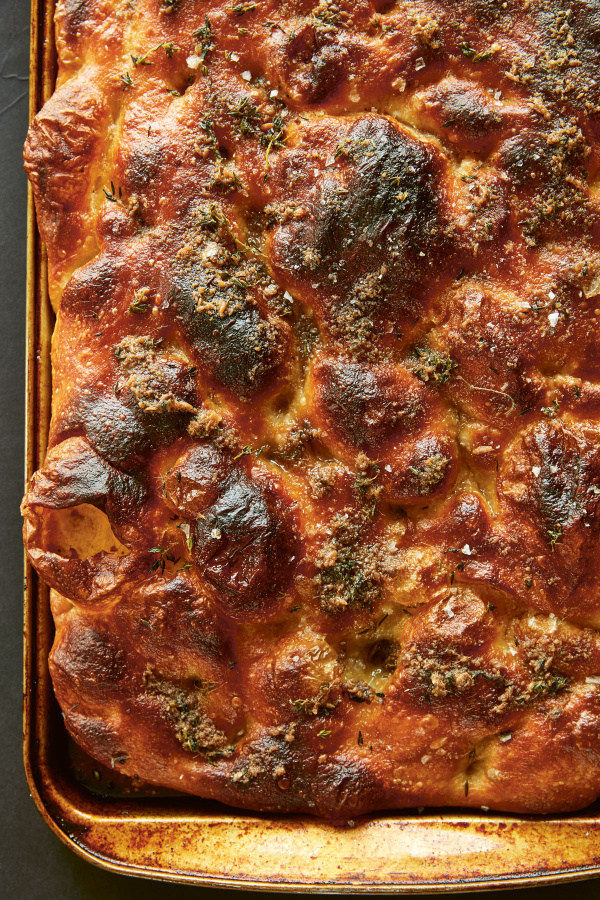
Anchovy and Thyme Focaccia
by Kate Young, featured in Dinner At Mine? Published by Head Of ZeusIntroduction
I wish I could tell you I make all my own bread. I always mean to get a sourdough starter going, but I’ve accepted that my favourite bakery makes better loaves than I can in my oven. But this focaccia? This is worth making at home, the only bread I regularly make. The key is the anchovy topping; bread is at its best when generously salted and dipped in olive oil, and this one is from the moment you take it out of the oven.
Ella Risbridger and I have spoken often about focaccia over the years, testing again and again, sending photos back and forth, until we nailed our recipes. What really helps is a slow overnight prove (I know – you can avoid this if you want, but it really is better), and a salt brine during the final rise, a tip courtesy of the brilliant Samin Nosrat. The base recipe is from James Morton’s Brilliant Bread; the uneven structure and chewy texture it yields is a dream. Over time, I have played around with adding more and more water – an extra 5ml a batch – until I landed on this level of hydration, which finally feels right for my flat most days. When baking bread, the water it asks for is dependent on environmental factors – humidity, height above sea level – and on the age of your flour, so it’s worth tinkering with bread recipes to get things right in your own kitchen.
A note here before you begin: if you’re used to working with a sandwich bread dough, focaccia is going to feel impossibly wet and unrecognizable. I promise I haven’t made a typo below. Just coat your hands with oil when folding it over in the bowl to prevent it sticking; don’t be tempted to add flour to make it easier to work with.
Ingredients
Serves:
For the dough
- 500 grams strong white bread flour
- 7 grams sachet easy-action yeast
- 2 teaspoons fine sea salt
- 420 millilitres tepid water
- 50 millilitres olive oil (plus a few extra tablespoons for lining the tray)
For the infused oil
- 100 millilitres olive oil
- 1 x 50 grams tin anchovies and their oil
- Leaves from 8 thyme sprigs
- A pinch of flaky sea salt
For the salt brine
- 1 teaspoon fine sea salt
- 2 tablespoons lukewarm water

Method
Anchovy and Thyme Focaccia is a guest recipe by Kate Young so we are not able to answer questions regarding this recipe
You will need:
20 x 30cm baking dish or tray, lined with greaseproof paper if it’s the sort of tray things tend to stick to.
- Tip the flour into a large mixing bowl, and add the yeast on one side and the salt on the other. Mix the water and olive oil together and pour these over the top. Bring the dough together with your hands – don’t worry about getting it smooth, just so long as everything is incorporated – then cover the bowl with a damp tea towel and leave for 45 minutes to swell in size. You should see air bubbles in the dough when you return to it.
- Next, the dough needs to be worked so that it is smooth. It’s far too wet to haul out and knead, so instead, oil your hand, slip it under the dough, and fold it over on itself. Turn the bowl 90 degrees and repeat. Do this 20 or so times, oiling your hand again if the dough starts to stick, until the dough is smoother and sitting a little prouder – it needs to be holding its own weight a little rather than instantly collapsing down after you fold it. Cover the bowl with a damp tea towel and leave in the fridge for 8 hours (or overnight) to prove, after which time the dough will have doubled in size; it will look very light and full of air. Of course you can do this rise in an hour in your warm kitchen, if you need to be eating it soon. But if you can stand to wait until tomorrow, then it’s worth going all in with a long prove; I promise it will be worth it.
- The next day, take the dough out of the fridge to come to room temperature. While it does, prepare your infused oil. In a saucepan, warm the oil, anchovy fillets, and thyme leaves over a low heat. The oil should never sizzle or simmer; this is a very gentle process. After 10 minutes on the heat, mash the anchovies into the oil, then turn off the heat and allow the oil to infuse for an hour.
- Pour some oil into the baking dish or tray, and use it to cover the entire surface area, including up the sides. Tip the dough in, then fold it over itself a few times on the tray, again stopping when it can hold its own weight better. Push the dough out into a large rectangle. It will spring back, so be patient, pushing it out with oiled hands, allowing it to rest for 10 minutes if it keeps bouncing back, before returning to stretch it again.
- Once the dough has been pressed out into a rectangle, make the brine by stirring the salt into the water until it dissolves. Press your fingers deep into the top of the dough to create divots, then spoon the brine over the top. The dough at this stage is like a huge alien sucker – damp and liable to cling to anything you cover it with. I’ve draped the dough in wet tea towels and cling film rubbed in olive oil, and often spend frustrating minutes peeling them off the dough before it heads into the oven, rupturing those gorgeous bubbles that have formed. The best solution I’ve found is to leave it somewhere non-draughty, uncovered, for its final prove. Leave to rise for a final hour.
- About 20 minutes before the dough is due to be ready, preheat your oven to 230°C/450°F/gas 8. Before the focaccia goes into the oven, pour a couple of tablespoons of the infused oil (without any of the thyme leaves, which burn at high temperatures) over the top, allowing it to drip into those holes you created. Bake for 25–30 minutes until deep golden brown and risen.
- Once the focaccia is baked, lever it out of the pan (be gentle with it) so that it doesn’t sweat on the base as it cools. Add another few tablespoons of the infused oil (with the thyme leaves this time) to the top, and allow to cool before slicing into it.

Tell us what you think
Thank you {% member.data['first-name'] %}.
Explore more recipesYour comment has been submitted.